
 Available in US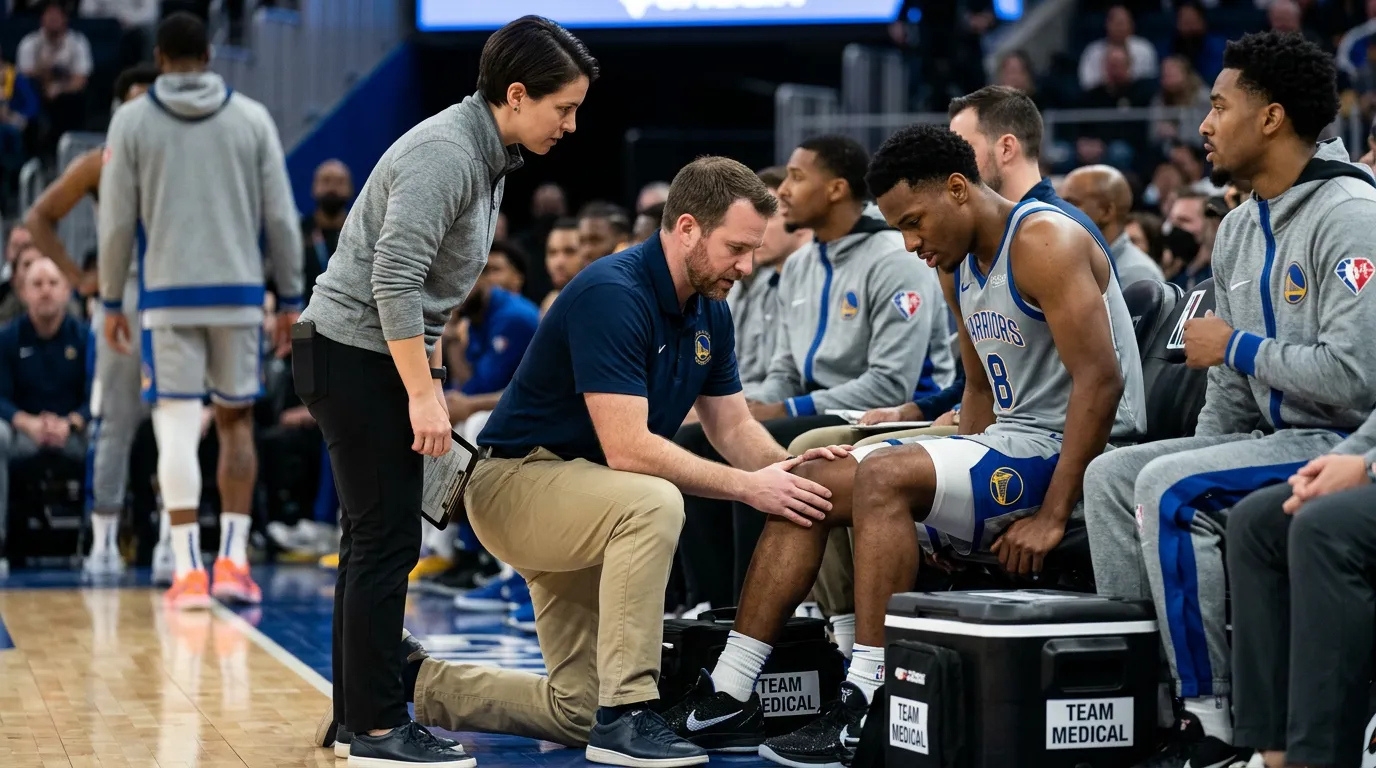
The text alert came at 6pm UK time: Ja Morant ruled out with an ankle tweak. The spread sat at Memphis -5.5. Within 90 seconds, it moved to Memphis -2. Within five minutes, Memphis was +1. I’d managed to grab Memphis +0.5 in that chaos. They lost by 3, but the process was correct – information speed created opportunity that slower bettors couldn’t access.
Injury news moves NBA betting lines more dramatically than almost any other factor. A star player’s absence can swing spreads 4-6 points within minutes of announcement. For bettors prepared to act quickly on confirmed information, these movements create windows where value exists before markets fully adjust.
The challenge lies in information access and processing speed. Professional bettors monitoring every team’s injury situation can react instantly to announcements. Recreational bettors checking lines an hour later find markets already adjusted. Understanding the injury information ecosystem helps you position for advantage rather than disadvantage in this rapid-moving landscape.
How Injuries Affect Lines
Star player absences produce the largest line movements. A top-10 NBA player missing a game might move lines 4-6 points depending on team depth. Secondary stars create 2-4 point movements. Role player absences rarely move lines more than 1 point unless they fill critical defensive or spacing roles.
The movement magnitude depends on team construction. A star absence on a top-heavy team creates larger impact than on a deep roster. The Nuggets without Jokić look fundamentally different; teams built around multiple contributors absorb absences more easily. Know which teams suffer most from specific player losses.
Injury type affects movement beyond simple presence/absence. A player listed “questionable” with a minor issue might be assumed to play; sudden pre-game scratches move lines sharply. Extended absences get priced into lines gradually over preceding days. The surprise factor often matters as much as the impact magnitude.
Cumulative absences compound rather than add linearly. A team missing their best player and their third-best player suffers more than the sum of individual impacts because defensive attention concentrates on remaining options. Track which players are already out when evaluating new injury news – context matters enormously.
Information Sources and Timing
NBA teams must submit official injury reports by 5pm Eastern time on game days. These reports categorise players as Out, Doubtful, Questionable, or Probable. The categories carry rough probability implications: Out means definitely not playing; Doubtful suggests maybe 25% chance; Questionable implies roughly 50/50; Probable indicates likely to play.
Practice reports emerge earlier in the day and often signal official status. Beat writers attending morning shootarounds report who participated, who was limited, who was absent. This information foreshadows official injury report designations, creating early indicators for informed bettors.
Social media accelerates information spread but requires caution. Verified team reporters break legitimate news; random accounts spread speculation and outright misinformation. Build a trusted source list for each team you follow closely. False injury rumours can cost money if you act on unreliable information.
UK timing creates structural challenge. The 5pm Eastern deadline is 10pm UK time – reasonable for late games but potentially after early East Coast tip-offs have started. Morning UK research can establish baseline positions; evening updates refine or reverse based on injury clarity.
Strategic Responses to Injury News
Speed matters most for high-impact injury announcements. If you learn a star is ruled out before the market adjusts, you have perhaps 60-90 seconds to act at the previous line before movement begins. This window rewards preparation – knowing which players matter most, having accounts funded and ready, monitoring reliable sources actively.
Contrarian injury betting sometimes offers value after markets overreact. A star’s absence might move lines 5 points when the true impact is 3 points. Bettors loading up on the opponent after seeing the injury create overcorrection that favours the shorthanded team at the new price. This approach requires confidence that your impact assessment exceeds the market’s.
Player prop implications extend beyond the absent player. Teammates see increased usage, touches, and scoring opportunity when stars sit. Backup players at the absent player’s position might exceed their usual lines. Think through second-order effects – not just how the injury affects the team but how it redistributes individual statistical opportunity.
Pre-injury positioning creates value when you anticipate absences before they’re announced. A player listed as questionable for several days might be assumed healthy by markets pricing closer to normal; if you expect them to sit, getting positions before official announcement captures better prices than reacting afterward.
Injury Betting Questions
Building Injury Awareness Into Process
I check injury status three times daily during NBA season: morning UK time for overnight developments, early evening for official injury reports, and immediately before any bets I’m placing. This routine catches most relevant information without requiring constant monitoring that would interfere with normal life.
Maintain running notes on which players matter most for each team’s betting lines. Not every player absence moves markets meaningfully. Knowing that Team X loses 4 points of spread value without Player Y enables faster reaction when that specific news breaks, rather than calculating impact in real-time.
Accept that you’ll miss some opportunities. Professional bettors with dedicated injury monitoring systems will beat you to the best prices on surprise announcements. Focus on situations where your preparation creates edge: anticipated absences, second-order prop effects, and contrarian positions after market overreaction.
The injury factor reminds us that NBA betting rewards engagement and preparation. Passive bettors who place wagers without checking injury status handicap themselves unnecessarily. Active bettors who incorporate injury information systematically gain edge without requiring unusual skill in game analysis.
Build injury checking into your pre-bet routine as mandatory step rather than optional consideration. Before any NBA bet placement, verify current injury status for both teams. This simple discipline prevents the frustrating experience of backing a team then discovering their star was ruled out after your bet but before tip-off.
The information flow around NBA injuries continues accelerating. Twitter provides real-time updates from team reporters; dedicated injury tracking services aggregate information across all teams; official injury reports provide formal confirmation. Navigating these sources efficiently – knowing which to trust, when to act, when to wait for confirmation – determines whether injury information helps or hurts your betting.
Consider injury monitoring tools that automate alerts for teams you frequently bet. Rather than manually checking status repeatedly, notifications when key players’ status changes allow you to focus attention where it matters. The time invested in setting up such systems pays dividends across entire seasons of informed betting.
Injury awareness exemplifies the information edge that separates successful bettors from recreational punters. The data is publicly available; the difference lies in who systematically incorporates it into every betting decision versus who occasionally remembers to check.
Articles
Published by the nbabetonline team.
